
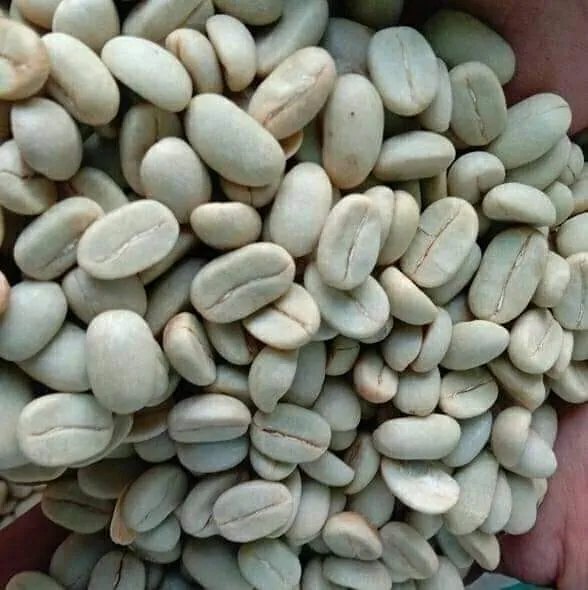
If you want to know how to import coffee beans from Indonesia, finding beans is rarely the hard part. The hard part is matching the specification, the export documents and your country’s import rules before the container leaves port. This guide takes importers, wholesalers, roasters and food manufacturers in Japan, China, Singapore, the UAE and Saudi Arabia through each step of buying Indonesian coffee beans. We are CV Sekawan Cipta Dinar, an exporter in Sidoarjo, East Java, near Tanjung Perak port in Surabaya. Our Java Robusta and Arabica are sold as Grade A and sorted following the Indonesian National Standard (SNI) for coffee beans.
Why Buyers Source Indonesian Coffee Beans
Indonesia is one of the world’s largest coffee producers. According to WITS/UN Comtrade data for 2023 (HS 090111), it exported 276,242 tonnes of green coffee worth US$915.8 million. The United States, Egypt and Japan were the top three destinations by value.
Most of the crop is Robusta. The USDA’s Indonesia Coffee Annual (May 2026) forecasts the 2026/27 crop at about 11.4 million 60-kg bags, roughly 8% below the previous year after heavy rain during flowering. It therefore pays to agree specifications and shipment windows early.
Our Robusta and Arabica come from Java. For origin and cup profile, see our guide to Java coffee beans; this article focuses on the import process.
How to Import Coffee Beans from Indonesia, Step by Step
Step 1: Define Exactly What You Need
Write the specification before asking for prices, so quotations are comparable. The green coffee price per kg depends on:
- Species: Arabica or Robusta.
- Origin and processing: the island or region, and the processing method of the lot.
- Quality: the grade name (for example, Grade A), the defect value measured by the SNI method, and the maximum moisture with its measurement method.
- Bean size: the screen range in millimetres and the sieve type.
- Volume and packaging: tonnage (check the supplier’s minimum order), pack type, Incoterm and shipment window.
Step 2: Understand SNI Grading
The reference standard for Indonesian coffee beans is SNI 2907:2008 “Biji kopi” (published as SNI 01-2907-2008). It covers Arabica and Robusta only. Indonesia’s National Standardization Agency (BSN) re-confirmed it without technical changes in March 2026. Its general requirements include no live insects, no beans that smell rotten or mouldy, and moisture of 12.5% or less. The grade then depends on the total defect value in a 300 g sample:
| SNI grade | Total defect value (300 g sample) |
|---|---|
| Grade 1 | max. 11 |
| Grade 2 | 12–25 |
| Grade 3 | 26–44 |
| Grade 4 (Arabica) | 45–80 |
| Grade 4a (Robusta) | 45–60 |
| Grade 4b (Robusta) | 61–80 |
| Grade 5 | 81–150 |
| Grade 6 | 151–225 |
Source: SNI 2907:2008, Tables 6–7.
Defect values are weighted points, not percentages or bean counts. A fully black bean scores 1 point, a partly black bean 1/2 and a broken bean 1/5. If one bean has several defects, only the heaviest counts. A sample with 3 black beans, 2 partly black beans and 15 broken beans therefore scores 3 + 1 + 3 = 7 points, within the Grade 1 limit. Spec sheets that show defects as a percentage by weight use a different measure, so the two numbers cannot be compared directly.
Grade A is our commercial grade name, not an SNI grade number. Ask for the laboratory analysis of your lot and specify the parameters it should report, such as moisture and defect value.
Step 3: Check the Supplier’s Specification Sheet
A usable spec sheet gives sizes in millimetres, the moisture target, the processing and the documents. Here is ours:
| Parameter | Java Robusta and Java Arabica |
|---|---|
| Grade | Grade A (commercial grade name) |
| Origin | Java, Indonesia |
| Moisture | Dried to 11–12%, max. 12% |
| Processing | Six-step process (below); method confirmed per lot |
| Documents | Certificate of origin, laboratory analysis, phytosanitary certificate |
| MOQ | 19 tonnes (one 20-ft container) |
| Bean and size class | Round-hole screen |
|---|---|
| Robusta, Large | Retained on 7.5 mm |
| Robusta, Medium | Passes 7.5 mm, retained on 6.5 mm (SNI Sieve No. 16) |
| Robusta, Small | Passes 6.5 mm, retained on 5.5 mm (SNI Sieve No. 14) |
| Arabica | Retained on 6.0 mm, up to beans over 7.0 mm; exact range agreed in the contract |
Screen numbers (in 1/64 inch) do not convert exactly to round-hole millimetres, so the millimetre sizes govern. Write the size you need into the contract.
How the sizes compare with SNI. Our Robusta sizes use the same millimetre limits as SNI’s three size classes for wet-processed Robusta. For dry-processed Robusta, SNI has only two classes (above 6.5 mm, and 6.5–3.5 mm).
How our coffee is processed. Our six steps are cherry sorting (fully ripe red cherries only), pulping (for the wet and semi-wet methods only), fermentation and washing for 12–36 hours to remove the mucilage, drying of the parchment to 11–12% moisture, hulling to green beans, and final sorting by size and defects, by hand or with a colour sorter. SNI names only two processing categories, dry and wet, so the method of each lot is confirmed in the offer.
Step 4: Approve Samples and the Lab Analysis
Most buyers approve an offer sample, check a pre-shipment sample from the actual lot, and keep a sealed reference sample on both sides to settle any quality claim.
Our quality control has four layers: procurement and pre-sorting with partner farmers, cleaning and drying, lab testing with a QC report, and export packing and documents. Our export documents include a laboratory analysis (certificate of analysis); tell us which parameters you need, such as moisture, defect value or bean size. If your market requires extra tests, such as ochratoxin A or pesticide residues, list them in your inquiry so we can confirm what is possible.
Step 5: Choose Incoterms and Payment Terms
Under Incoterms 2020, common choices are FOB Surabaya (Tanjung Perak), where you arrange freight and insurance, and CFR or CIF to your port, where the exporter books freight (CIF adds minimum insurance). Under all three, risk passes to you once the goods are on board. Payment is agreed per contract, commonly T/T with a deposit and the balance against shipping documents, or a letter of credit (L/C).
Step 6: Get the Export Documents Right
Green coffee falls under HS 0901.11 (coffee, not roasted, not decaffeinated). A typical document set:
| Document | Issued by | Purpose |
|---|---|---|
| Commercial invoice | Exporter | Value, Incoterm and payment basis |
| Packing list | Exporter | Packages, net/gross weights, lot marks |
| Bill of lading | Shipping line | Transport contract and title document |
| Phytosanitary certificate | Badan Karantina Indonesia (Indonesia’s quarantine agency) | Plant-health clearance where the destination requires it (Japan currently exempts unroasted coffee beans) |
| Certificate of origin (SKA, Surat Keterangan Asal) | Ministry of Trade e-SKA system | Proves origin; preferential forms (e.g. Form E, RCEP) where the destination and origin rules allow; ask us to confirm |
| Laboratory analysis (certificate of analysis) | Exporter or appointed lab | Test results for the lot (parameters confirmed per order) |
| MSDS (Material Safety Data Sheet) and others | Exporter | On request |
Step 7: Plan the Container, Packing and Moisture Control
Our minimum order is 19 tonnes, one 20-ft container. The industry reference pack is the 60 kg jute bag. According to industry loading guides, a 20-ft container typically holds about 275–320 bags (16.5–19.2 tonnes), or about 21 tonnes with a bulk liner. At 19 tonnes, that is about 317 bags, which typically requires floor-loading (not palletised) or a bulk liner.
Our packaging options include vacuum packs, bulk, aluminium foil, kraft and PP bags; tell us your preferred pack. Because the loaded weight depends on the packaging, we confirm it in the quotation.
Condensation inside the container (“container rain”) is a key transit risk. Wall linings, floor cardboard, desiccants and hermetic inner liners all help.
Customs Clearance in Japan, China, Singapore, the UAE and Saudi Arabia
The rules for importing Indonesian coffee beans differ by country and change over time. Use this overview as a starting point and confirm current requirements with your customs broker or the relevant authority.
| Market | Indonesia’s share of green coffee imports, 2023 | Key authority / system | Certificate of origin |
|---|---|---|---|
| Japan | #6, ~4.7% | MAFF plant import inspection; MHLW food import notification | Not needed for duty (currently duty-free); IJEPA or RCEP possible |
| China | #4, ~5.7% | GACC; check the exporter’s registration status | Form E (ACFTA) or RCEP |
| Singapore | #1, ~38% | SFA licence or registration; TradeNet permit per consignment | Not needed for duty (no duty on coffee); Form D or RCEP possible |
| UAE | #8, ~3% | ZAD registration (MOCCAE); Dubai Municipality FIRS | IUAE-CEPA |
| Saudi Arabia | #10, under 1% | SFDA: GHAD registration, FASAH clearance | Standard (non-preferential) |
Import shares: WITS/UN Comtrade 2023, importer-reported, HS 090111.
Certificates of origin: preferential forms apply only where origin rules are met; ask us to confirm. ACFTA = ASEAN–China Free Trade Area; RCEP = Regional Comprehensive Economic Partnership; IJEPA = Indonesia–Japan Economic Partnership Agreement; Form D = ASEAN (ATIGA) form; IUAE-CEPA = Indonesia–UAE Comprehensive Economic Partnership Agreement.
Japan
Under Japan’s Plant Protection Act, unroasted coffee beans are currently among the dried plants that do not need a phytosanitary certificate from the exporting country. Each shipment must still pass import plant inspection at a Plant Protection Station of MAFF (Ministry of Agriculture, Forestry and Fisheries). The importer also files a food import notification with an MHLW (Ministry of Health, Labour and Welfare) quarantine station under the Food Sanitation Act. Green coffee currently enters Japan duty-free under the general rate, so a preferential certificate of origin is usually not needed for duty; check Japan Customs’ current tariff schedule.
China
The General Administration of Customs of China (GACC) updated its registration rules for overseas food and agricultural exporters in 2025 and 2026. Under the current rules, the exporter of unroasted coffee may need to appear on GACC’s registration list, and the importer may need to quote the exporter’s registration number in the customs declaration. A phytosanitary certificate is generally expected. Confirm the exact requirements, and the supplier’s registration status, with your customs broker before signing.
Singapore
For buyers of green coffee beans in Singapore, Indonesia is the leading origin (see table above). Only traders licensed or registered with the Singapore Food Agency (SFA) may import food for sale:
- Check the product’s classification with SFA.
- Activate your UEN (Unique Entity Number) with Singapore Customs.
- Apply for the matching SFA licence or registration (for coffee beans, typically the registration to import processed food products; SFA confirms the category).
- Get a TradeNet import permit for every consignment.
Singapore charges no customs duty on coffee, but 9% GST applies on imports.
United Arab Emirates
For coffee wholesale in Dubai, food products generally need to be registered before import. Registration generally runs through ZAD, the UAE’s federal food registration platform run by the Ministry of Climate Change and Environment (MOCCAE). In Dubai, consignments are then handled through Dubai Municipality’s FIRS (Food Import and Re-export System), which is linked to ZAD. Other emirates, such as Abu Dhabi (ADAFSA), have their own procedures. Indonesia issues certificates of origin under IUAE-CEPA, in force since 1 September 2023; ask your broker whether it changes the duty on your product.
Saudi Arabia
Ethiopia supplied about 68.5% of Saudi Arabia’s green coffee imports in 2023 and Indonesia under 1% (WITS/UN Comtrade), so the main opportunity is with roasters, blenders and makers of instant or ready-to-drink coffee.
The Saudi Food and Drug Authority (SFDA) generally requires the importer and its food products to be registered on its GHAD platform before import, and shipments are cleared through the FASAH single window. Retail packs need Arabic labelling. As of September 2026, no free trade agreement is in force between Indonesia and Saudi Arabia. A GCC–Indonesia FTA is under negotiation and targeted for conclusion in late 2026, so for now a standard certificate of origin is used; check the status with your broker.
Common Mistakes to Avoid
If you are learning how to import coffee from Indonesia for a new market, avoid these mistakes:
- Buying on a label instead of numbers. A grade name without the defect value, moisture method and screen size in millimetres invites disputes.
- Registering too late. Complete GHAD, ZAD, SFA and China registration checks before the beans are at sea.
- Relying on old rules. Japan’s plant quarantine rules and China’s registration rules have both changed in recent years, so re-check requirements for each contract.
Request a Quote for Indonesian Green Coffee Beans
CV Sekawan Cipta Dinar is a green coffee beans supplier and spice exporter in Sidoarjo, East Java. For coffee beans wholesale, we supply Grade A green Robusta and Arabica from Java, sorted following SNI, with a minimum order of 19 tonnes (one 20-ft container). We can also discuss Liberica and coffee powder; specifications on request. View our coffee range.
To order coffee beans in bulk, send us the species, bean size, volume, packaging, Incoterm and destination port, plus any documents or tests you need, and we will prepare a quotation.
- Request a quote: sekawanciptadinar.id/#order
- WhatsApp: +62 852-3001-7377
- Email: inquiry@sekawanciptadinar.id
Frequently Asked Questions
What documents do I need to import coffee beans from Indonesia?
Typically a commercial invoice, packing list, bill of lading, certificate of origin, laboratory analysis and, where the destination requires it, a phytosanitary certificate (Japan currently exempts unroasted coffee beans). Registrations such as GHAD, ZAD or SFA may also apply; confirm the full list with your broker.
What is your minimum order quantity for green coffee?
Our MOQ is 19 tonnes, one 20-ft container, or about 317 bags of 60 kg (floor-loaded or with a bulk liner). The final loaded weight depends on the packaging and is confirmed in the quotation.
How does Grade A relate to SNI grades?
Grade A is our commercial grade name, not an SNI grade number. SNI grades run from 1 to 6 by the weighted defect value in a 300 g sample. The laboratory analysis of your lot shows its measured results, and any SNI grade you require should be written into the contract.
What HS code applies to green coffee beans?
Green coffee that is not roasted or decaffeinated falls under HS 0901.11. Your country may add national digits, so confirm the full tariff code with your customs broker.
Can I combine coffee and spices in one container?
Sometimes. Green coffee absorbs odours easily, so many buyers ship it only with non-aromatic cargo. If you also want our cloves (see our Lalpari cloves guide) or cinnamon, discuss it with us first. Sealed packaging and physical separation are the minimum, and some buyers prefer separate containers.