
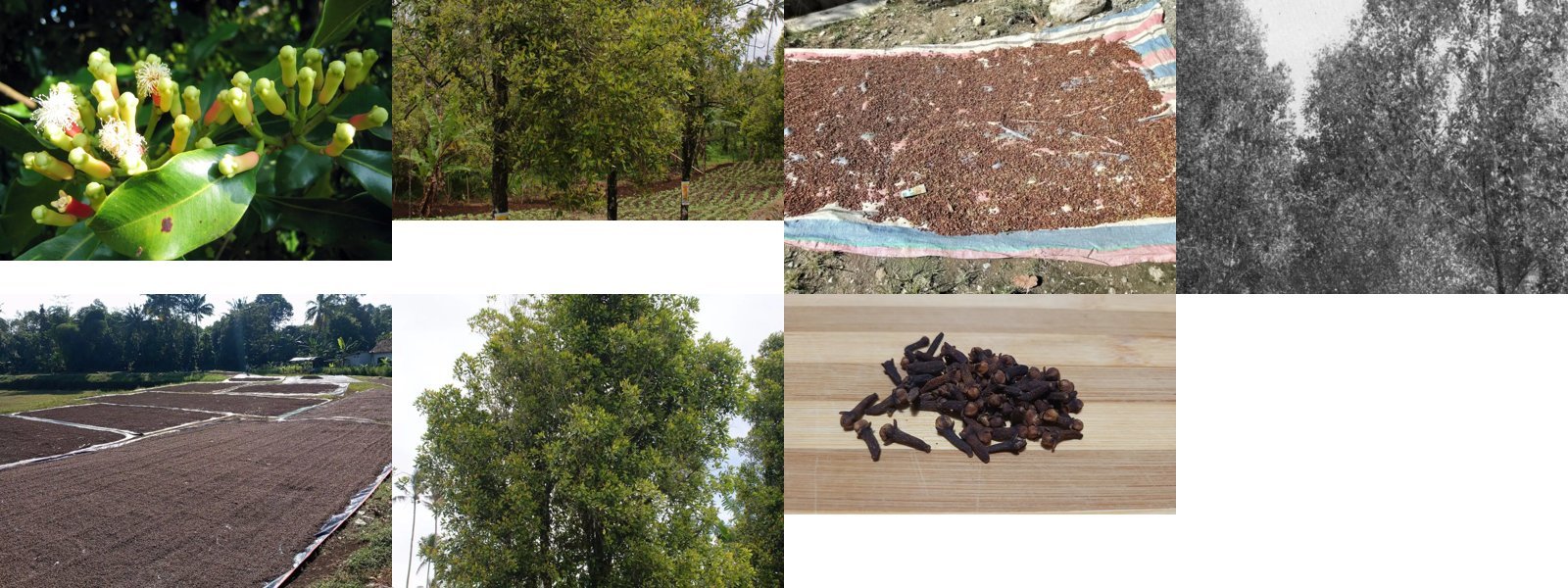
Clove producing regions in Indonesia are spread across almost the whole archipelago, but most of the crop comes from a few islands. In 2024, the Ministry of Agriculture counted 34 clove-producing provinces and a national output of about 147.9 thousand tonnes. Five provinces, four of them on Sulawesi, supplied about 61% of it. This guide is for spice importers, blenders and food manufacturers in Japan, China, Singapore, the UAE and Saudi Arabia who want to know where Indonesian cloves actually grow, and what the region means for an order.
CV Sekawan Cipta Dinar packs cloves in Waru, Sidoarjo, East Java, close to Tanjung Perak in Surabaya. The trade name buyers use is explained in our Lalpari cloves buyer’s guide, the timing of the crop is in when to order Indonesian cloves, and the steps from inquiry to clearance are in how to import cloves from Indonesia. Here we only map the regions.
Indonesia’s Clove Crop in 2024 at a Glance
| Item | 2024 figure | Source |
|---|---|---|
| National clove production | about 147.9 thousand tonnes | Ministry of Agriculture, via Databoks |
| Clove-producing provinces | 34 (only Jakarta, Riau, Central Kalimantan and Highland Papua produce none) | Ministry of Agriculture, via Databoks |
| Share of the top five provinces | about 61% | Ministry of Agriculture, via Databoks |
| Clove plantation area | 572,410 ha | BPS, via Databoks |
| Smallholder (people’s) plantations | 564,455 ha, or 98.61% of the area | BPS, via Databoks |
| Dry clove flower production | 157,321 tonnes, 99.68% from smallholders | BPS, via Databoks |
The two national totals differ because they come from two agencies: about 147.9 thousand tonnes from the Ministry of Agriculture and 157,321 tonnes of dry clove flower from BPS. We quote both and do not mix them in one calculation. The province table below uses the Ministry of Agriculture series.
The Top 10 Clove Producing Provinces in Indonesia
| Rank | Province | Island group | Production 2024 (tonnes) | Share of national total |
|---|---|---|---|---|
| 1 | Central Sulawesi | Sulawesi | 23,265 | 15.7% |
| 2 | Maluku | Maluku | 21,809 | 14.7% |
| 3 | South Sulawesi | Sulawesi | 21,121 | 14.3% |
| 4 | Southeast Sulawesi | Sulawesi | 14,404 | 9.7% |
| 5 | North Sulawesi | Sulawesi | 10,327 | 7.0% |
| 6 | West Java | Java | 10,277 | 6.9% |
| 7 | East Java | Java | 9,035 | 6.1% |
| 8 | Aceh | Sumatra | 5,917 | 4.0% |
| 9 | Central Java | Java | 5,295 | 3.6% |
| 10 | North Maluku | Maluku | 4,430 | 3.0% |
Shares are calculated from the sum of the 34 provincial figures published by Databoks. The next provinces on the list are East Nusa Tenggara (4,337 t), Riau Islands (2,635 t), Banten (2,633 t), Bali (2,344 t) and West Sumatra (2,320 t).
Sulawesi: Almost Half of the Crop
Add the six Sulawesi provinces together (Central, South, Southeast, North, West Sulawesi and Gorontalo) and they account for roughly 48% of the provincial total. Sulawesi also holds the largest planted areas. According to BPS, Central Sulawesi has 77,515 ha of clove plantations (13.54% of the national area), North Sulawesi 72,983 ha (12.75%) and South Sulawesi 69,578 ha (12.16%).
North Sulawesi is notable for a different reason. “Cengkeh Minahasa” is a registered geographical indication in Indonesia (IG.00.2014.000017, Directorate General of Intellectual Property). A geographical indication protects a regional name, so a buyer who sees it on an offer should expect the origin to be documented.
Maluku and North Maluku: The Clove’s Original Home
The clove tree comes from the Maluku islands, the historic Spice Islands. The two Maluku provinces together still supply about 18% of national production. Maluku ranks second by output with 21,809 tonnes and fourth by area with 47,327 ha. North Maluku, with Ternate and Tidore, adds 4,430 tonnes.
For a buyer, Maluku origin is part of the story behind Indonesian cloves. Logistics matter too: cargo from the eastern islands usually moves through a larger hub port before it leaves the country.
Java: Smaller Farms, Close to the Ports
West Java, East Java, Central Java, Banten and Yogyakarta together produce about 19% of the crop. East Java alone has 37,270 ha of clove plantations, the fifth largest area in the country, and produced 9,035 tonnes in 2024.
Java is also where most of Indonesia’s clove demand sits. A large share of the national crop goes into kretek cigarettes, an industry long established in Java. That domestic pull is one reason export availability can tighten in some months. Our harvest calendar for importers explains how to plan around it.
Sumatra, Bali and Nusa Tenggara
Aceh is the largest producer outside Sulawesi, Maluku and Java, with 5,917 tonnes. Other contributors include West Sumatra, Lampung and North Sumatra, each a little above 2,000 tonnes. East Nusa Tenggara produced 4,337 tonnes and Bali 2,344 tonnes. These regions are smaller, but they spread the harvest across more of the year.
Area and Output Do Not Rank the Same
Comparing the two Databoks tables shows that the largest planted area does not always mean the largest harvest. North Sulawesi has the second largest clove area in Indonesia (72,983 ha), but it ranks fifth by production. Maluku is fourth by area (47,327 ha) and second by production. Southeast Sulawesi is among the top four producers, yet it is not in the top five by area.
There are several reasons. Clove trees take years to reach full bearing, so young plantings add area before they add output. Clove trees also tend to alternate between heavy and light crop years, and that cycle does not run in step across every island. Finally, the area figures come from BPS and the production figures from the Ministry of Agriculture, so a direct yield calculation would mix two series. For an importer, the point is simple: one year’s ranking is a snapshot. The main regions stay the same, but their order can change from season to season.
A Smallholder Crop
BPS data shows that 98.61% of the clove area and 99.68% of dry clove production come from people’s plantations, meaning smallholder farms. Large private estates hold 1.37% of the area and state estates 0.02%.
That has practical effects for an importer:
- Lots are assembled. Cloves from many small farms are collected, dried and sorted before export, so consistency depends on the sorting and the specification, not on a single estate.
- The specification matters more than the island. Two lots from the same province can differ in moisture, stems and foreign matter. Our clove specification checklist lists the lines every offer should answer.
- Weather moves supply. Smallholder output responds to rainfall and harvest timing. That is why origin, harvest month and specification should be in the first message, not after the price.
What the Region Means for Your Order
| Question | Why region matters | What to ask the supplier |
|---|---|---|
| Where were the cloves grown? | Most export cloves are Sulawesi or Maluku origin, then Java | Province of origin for the lot |
| When were they harvested? | Harvest timing differs between regions and years | Harvest month and crop year |
| Where will they load? | Eastern-island cloves often move through a hub port | Port of loading and shipment month |
| Does the name carry a protected origin? | A geographical indication such as Cengkeh Minahasa protects a regional name | Whether a regional name on the offer is documented |
| Will it meet my specification? | Smallholder lots vary inside one province | Volatile oil, moisture, foreign matter and stems for this lot |
Writing Origin into the Inquiry
You can paste the block below into our quote form, a WhatsApp message or an email.
- Product: whole cloves (HS 0907.10).
- Origin: preferred province or island, or “no preference”
- Specification: volatile oil, moisture, foreign matter and stems, plus any extra limits
- Pack: vacuum, aluminium foil, kraft bags, PP bags or bulk packing
- Quantity, Incoterm, destination port and shipment month
- Documents your market requires, such as a phytosanitary certificate and certificate of origin
Request a Quote
Send the origin, the quantity, the pack, the specification and the documents your market needs. We reply within 24 working hours with a proforma invoice to review.
- Quote form: sekawanciptadinar.id/#order
- WhatsApp: +62 852-3001-7377
- Email: inquiry@sekawanciptadinar.id
Review the published figures on our clove product listing before you send the inquiry.
Sources
- Databoks (Katadata), “List of Clove-Producing Provinces in Indonesia in 2024”, data from the Ministry of Agriculture, published 14 Oct 2025. Link. Last checked 26 Okt 2026.
- Databoks (Katadata), “5 Indonesian Provinces with the Largest Clove Plantations in 2024”, data from BPS, published 11 Sep 2025. Link. Last checked 26 Okt 2026.
- Directorate General of Intellectual Property, list of registered geographical indications (Cengkeh Minahasa, IG.00.2014.000017). Link. Last checked 26 Okt 2026.
Frequently Asked Questions
Which province produces the most cloves in Indonesia?
Central Sulawesi. It produced 23,265 tonnes in 2024 according to Ministry of Agriculture data, about 15.7% of the national total, and it also has the largest clove plantation area at 77,515 ha.
How many cloves did Indonesia produce in 2024?
About 147.9 thousand tonnes according to the Ministry of Agriculture. BPS reports 157,321 tonnes of dry clove flower for the same year. The figures come from different agencies and methods.
Are Indonesian cloves grown on estates or small farms?
Mostly small farms. BPS data shows 98.61% of the clove area and 99.68% of dry clove production come from smallholder plantations.
Where do cloves originally come from?
The Maluku islands in eastern Indonesia, the historic Spice Islands. Maluku is still the second largest producing province, with 21,809 tonnes in 2024.
Does the region of origin change the clove specification?
Not by itself. Lots from the same province can differ, so agree volatile oil, moisture, foreign matter and stems for the specific lot, and ask for the province of origin alongside it.