
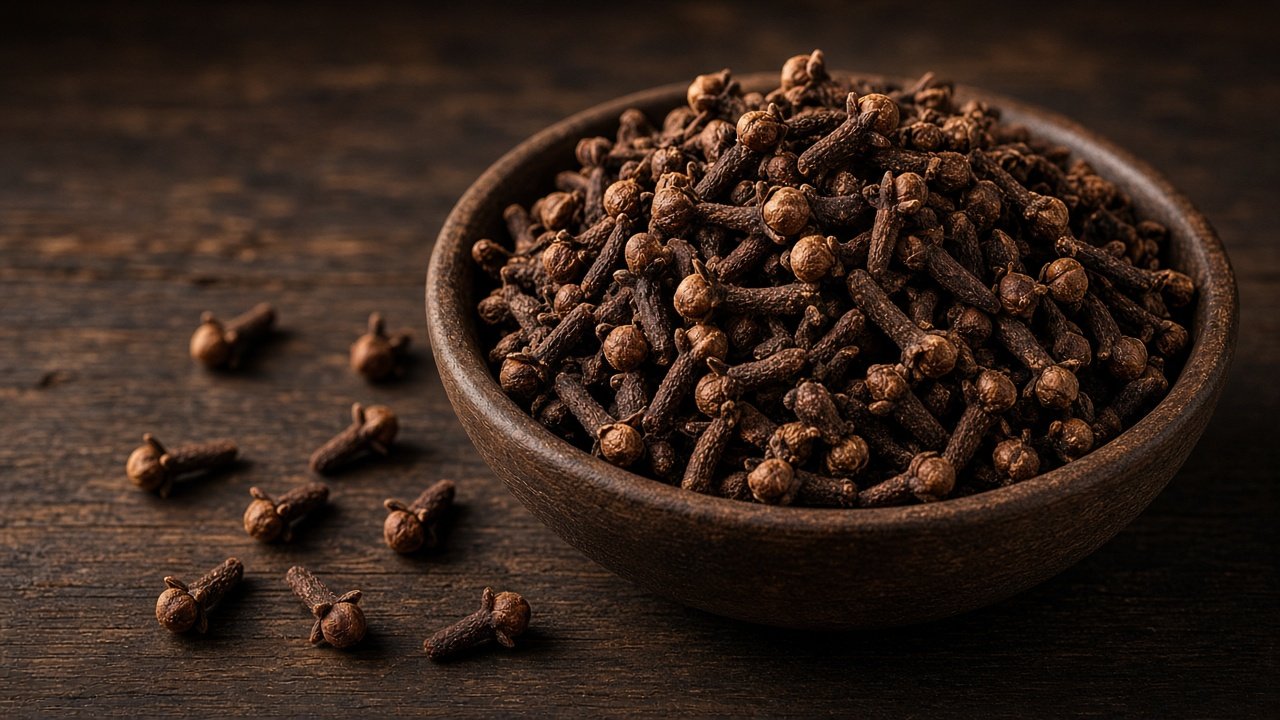
When to order Indonesian cloves depends on the island, not on a single national harvest date. Java, Sumatra, Sulawesi and Maluku do not pick in the same weeks, and a tree that fruited heavily last year may carry a light crop this year. This note is for spice importers who already know the Lalpari specification and now need a shipment window they can put in a contract.
CV Sekawan Cipta Dinar packs cloves in Waru, Sidoarjo, East Java, close to Tanjung Perak in Surabaya. The trade name, the oil and moisture figures, and the way the spice is used in your market are in our Lalpari cloves buyer’s guide. The numbers to write into the contract are on our clove product listing: volatile oil 18–21%, moisture 8–12%, foreign matter 0.5–1% and stems 1–2%.
There Is No One Indonesian Harvest
Pickers take the buds by hand when the heads are full and still closed, then sun-dry them to a brittle, reddish-brown spice. The main picking months fall between about May and September. The week shifts with local rain and from year to year, so a quotation should name a shipment window, not only a crop year.
| Region | Typical main harvest | What it means for a booking |
|---|---|---|
| Java | May to July–August | Often the first new-crop cloves of the season to reach a Java port |
| Sumatra | Varies by district, often around mid-year | Confirm the district window in the quotation; do not copy the Java dates |
| Sulawesi and Maluku | Dry mid-year months, often around July–September | Later new crop; useful if a May sailing has already been missed |
Central Sulawesi, South Sulawesi and Maluku were the top three provinces by output in 2024, according to the Directorate General of Estate Crops. Over 2019–2023 the Sulawesi provinces together produced more than 40% of the national crop (Ministry of Agriculture). Java is still a significant origin, and it is the island next to our port.
Why the Same Month Is Not the Same Crop
Two features of Indonesian supply matter more than the calendar alone:
- Smallholder farming. About 97–98% of output comes from smallholder plantations (Ministry of Agriculture). An export lot is gathered from many farms, then cleaned and dried. Booking early does not remove the need for a sample and a certificate of analysis.
- Yield cycles. In some areas clove trees bear heavily about every two years. In others the cycle is three to four years. A low year can cut output sharply against a peak year. Ask, when you request a quote, whether the window you want sits in a heavy or a light season for the origin being offered.
Indonesia’s kretek industry is the largest domestic user of cloves (Ministry of Agriculture, Outlook Cengkeh). Exporters and local factories bid for the same crop. A date that looks open on a calendar can still be tight if the domestic buyers are active.
New Crop, Carry-Over and Other Origins
Cloves are traded all year because Madagascar and the other origins do not harvest on the Indonesian calendar. A container in March is usually carry-over from the previous season, or a blend of shipment timing across origins, not buds picked that month in Java.
If you need new-crop colour and aroma, say “new crop” and name the months you can receive it. If you can accept carry-over, say that too, and keep the same specification: oil, moisture, stems, foreign matter, colour and aroma. A lower price on old crop is only comparable when those lines match.
What to Lock Before the Buds Are Picked
Send the shipment window with the specification, not after the proforma invoice. A workable inquiry includes:
- Arrival or sailing month, and whether the date is a deadline or a preference.
- New crop or carry-over, if one of them matters to your buyer.
- The published specification, plus any eugenol figure or defect limit your own buyer requires.
- Pack and Incoterm. Vacuum packs, bulk, aluminium foil, kraft bags and PP bags do not hold aroma equally over a long wait in a warehouse.
- Documents your port needs, so they are ready when the lot is, not after the vessel has closed.
We quote per order. Harvest size, the Madagascar crop, kretek demand, quality, volume, packing, freight and the rupiah–dollar rate all move the price. For example, Indonesia’s Ministry of Agriculture reported that clove prices fell 14.81% in 2020 compared with 2019, after a large harvest and weaker demand. Prices recovered in 2021–2022. That is why a price agreed for a May window should not be assumed for a September window.
A Simple Booking Calendar
| If you need cloves around | Start the inquiry |
|---|---|
| June–August (early Java crop) | Before the May pick, so the specification is agreed while the buds are still on the tree |
| August–October (Sulawesi and Maluku) | While the Java crop is being picked, not after that later crop has already been sold locally |
| November–April | Against carry-over or the next origin in the market; state that you are not asking for freshly picked Java buds |
These are planning ranges, not promises of stock. Availability is confirmed in the quotation.
Request a Quote for a Dated Shipment
Write the destination port, the quantity, the month you need the cloves, new crop or carry-over, the pack, and the specification. We reply within 24 working hours with a proforma invoice to review.
- Quote form: sekawanciptadinar.id/#order
- WhatsApp: +62 852-3001-7377
- Email: inquiry@sekawanciptadinar.id
You can also read more about us or use the contact page.
Frequently Asked Questions
Which months are the main Indonesian clove harvest?
Generally about May to September. Java is often May to July–August. Sulawesi and Maluku are often around July–September. The week moves with rainfall, so confirm the window in the quotation.
Can I buy Indonesian cloves outside the harvest?
Yes. From about November to April the offer is usually carry-over, or cloves from another origin’s calendar. Say which you will accept, and keep the same oil, moisture, stem and foreign-matter limits.
Does a heavy crop follow every year?
No. Bearing cycles are about two years in some areas and three to four years in others. A light year can cut the volume available to exporters, who also compete with the domestic kretek industry.
What specification should the dated quotation use?
Our published Lalpari figures are volatile oil 18–21%, moisture 8–12%, foreign matter 0.5–1% and stems 1–2%, with a rich reddish-brown colour and a strong aroma. A certificate of analysis is available on request.
When should I send the inquiry?
Before the picking month you care about, with the shipment month written in the same message as the specification. A price for one window does not carry over to the next.